
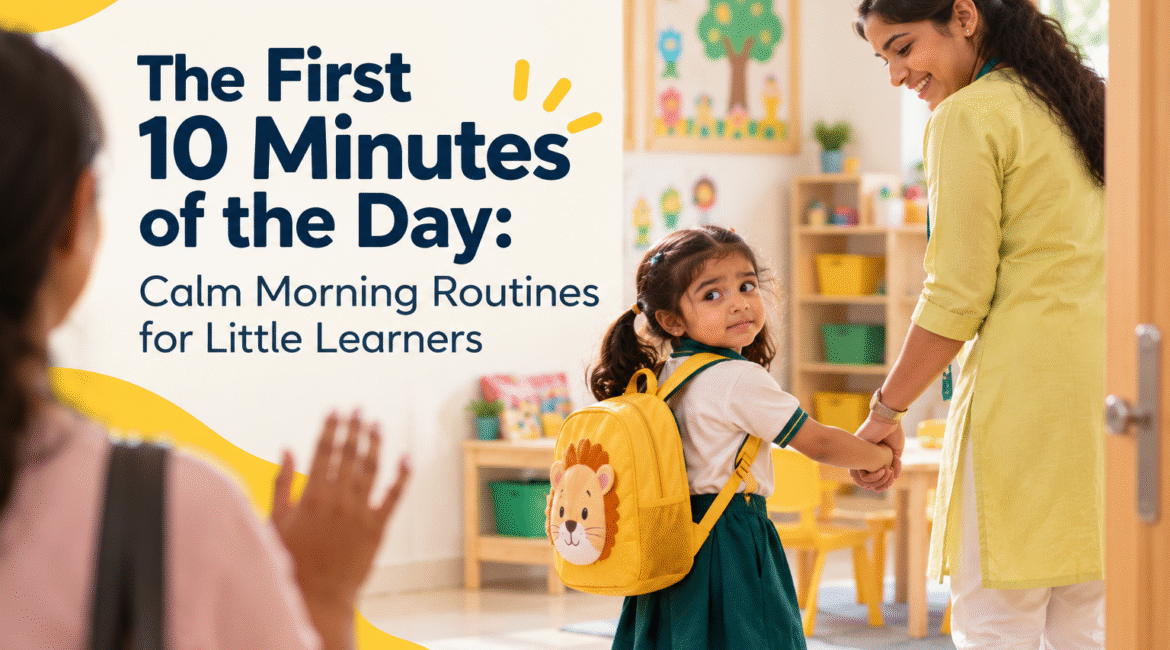

Every teacher knows that feeling. The gate opens, and in they come. One child is still half asleep. Another is bursting with news about a new pet. Someone is crying because Amma left too quickly, and someone else has already found the block corner.
Those first ten minutes can set the tone for the whole day. When the start is rushed and noisy, the rest of the day often follows. When it is calm and predictable, children settle faster, listen better and feel safe enough to learn.
The good news is that a calm start doesn’t need fancy materials or a big plan. It needs a simple morning routine for preschoolers that children can recognise, repeat and slowly begin to own.
Why the First 10 Minutes Matter So Much
Young children don’t yet have a strong sense of time. What they do understand is pattern. When the same few things happen in the same order every morning, their brains relax. They know what comes next, so they don’t have to worry about it.
A steady preschool morning routine helps children:
- Feel secure, especially after a tough drop-off
- Shift from home mode to school mode without stress
- Build independence, because they know what to do without being told
- Regulate their emotions before any learning begins
- Connect with their teacher and friends before the day gets busy
In early childhood education, we often talk about learning outcomes. But a child who feels unsettled can’t take in much, however good the lesson is. Calm comes first. Learning follows.
Start at the Door: A Warm, Personal Welcome
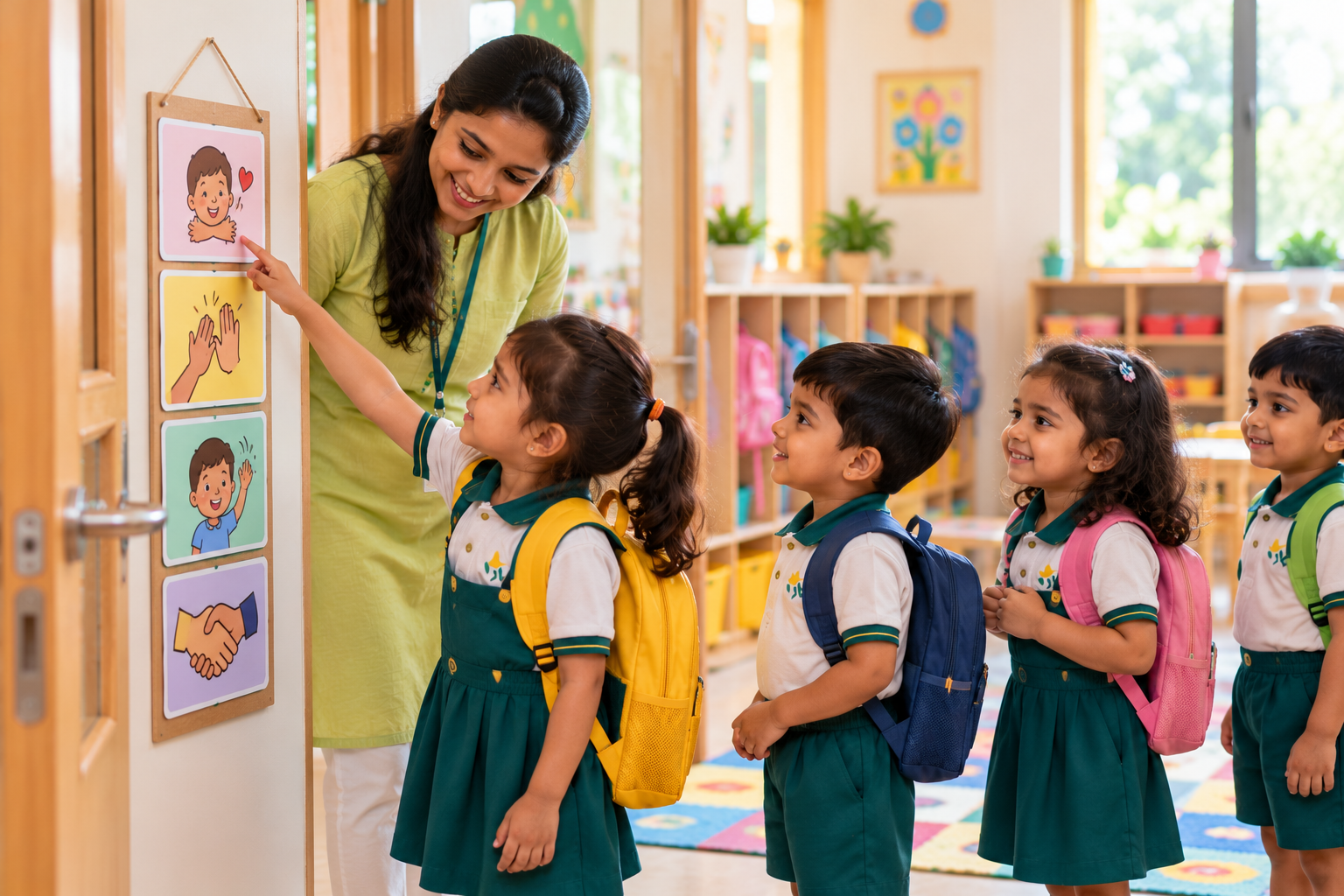
The routine really begins before the child even steps into the classroom. A warm welcome at the door tells every child, “You belong here, and I’m happy to see you.”
A few simple ideas that work well:
- Greet each child by name. It sounds small, but it matters enormously to a three-year-old.
- Offer a greeting choice. A picture chart by the door with a hug, a high five, a wave or a handshake lets children choose how they want to be greeted.
- Get down to their eye level. It feels friendlier and less overwhelming.
- Keep goodbyes with parents short and kind. A quick “See you at home time!” is usually easier for the child than a long, emotional farewell.
For the child who is crying, a gentle hand and a familiar task, like watering a plant or helping put out the crayons, often works better than lots of words.
Simple Jobs That Help Children Settle In
Once inside, children need something to do. Standing around waiting is where restlessness begins. Give them small, clear jobs they can manage on their own.
Some easy arrival jobs:
- Putting their bag and water bottle in the right place
- Moving their name card or photo to the “I’m here!” board
- Choosing how they feel today on a feelings chart
- Washing their hands before settling down
These little tasks do more than keep children busy. They build responsibility and a sense of ownership. Over a few weeks, you’ll notice children doing them without reminders, and that quiet confidence spills into the rest of the day.
Quiet Table Time: Gentle Activities to Ease In
Children arrive at different times, so it helps to have a few calm, open-ended activities ready on the tables. This is not the time for anything that needs lots of instruction. Think gentle, hands-on and self-directed.
Good settling activities include:
- Playdough or clay for squeezing, rolling and shaping
- Simple puzzles that children can finish on their own
- Picture books in a cosy reading corner
- Threading beads or lacing cards for little fingers
- Drawing with crayons on plain paper, with no instructions needed
These activities quietly build fine motor skills, focus and patience. They also give you a few precious minutes to check in with children one by one, notice who seems tired or upset, and have a quick word with any parent who needs it.
This is play-based learning at its simplest: children choosing, exploring and settling at their own pace.
Circle Time: Coming Together as One Group
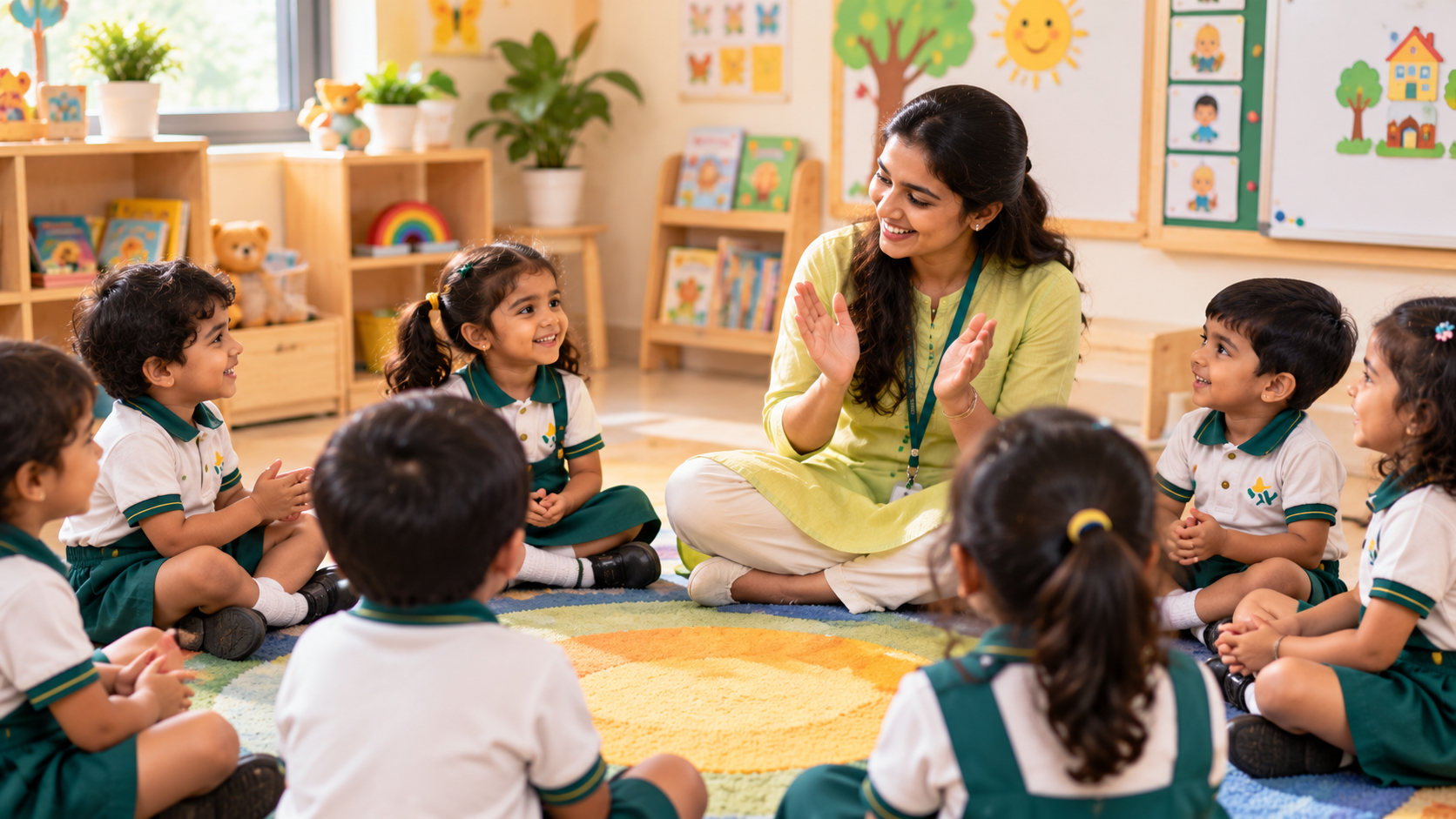
Once everyone has arrived and settled, it’s time to bring the group together. A short, predictable circle time helps children feel part of something bigger than themselves.
A simple circle time flow might look like this:
- A gathering song that always signals the start of circle time
- A hello round, where each child is greeted by name
- Talking about the day: the date, the weather and what’s coming up
- A short feelings check-in, so children can share how they feel
- A calm breathing moment, like “smell the flower, blow out the candle”
Keep it short, around 8 to 10 minutes for younger children. Circle time activities work best when they are lively but calm, with plenty of chances for children to join in through songs, actions and turn-taking.
A visual timetable on the wall also helps. When children can see the shape of the day in pictures, from play to snack to story to outdoor time, they feel more in control and transitions become much smoother.
Little Tips That Make a Big Difference
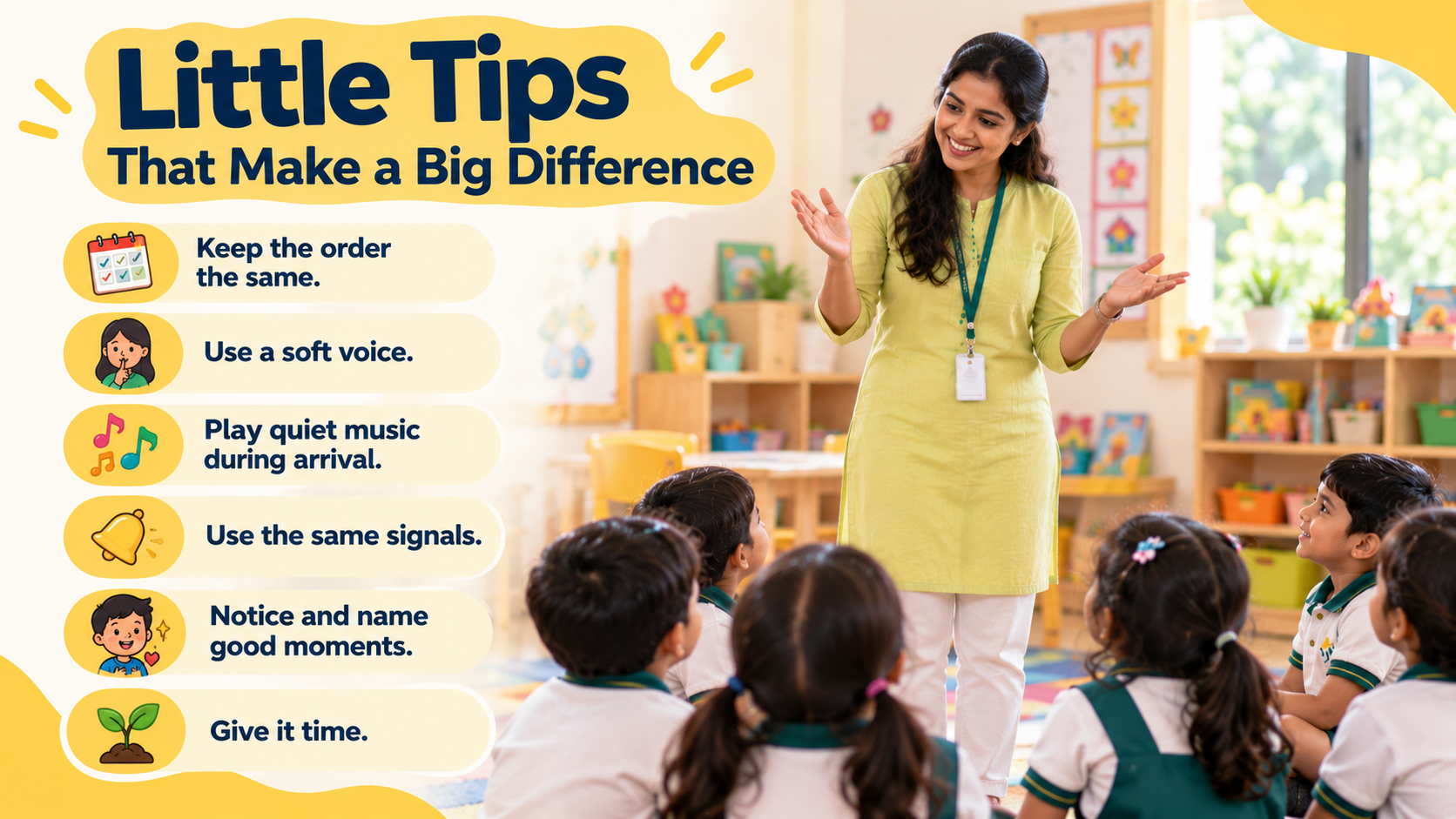
Every classroom is different, but a few small habits help almost every morning routine for kindergarten and preschool groups:
- Keep the order the same. Change activities if you like, but keep the sequence predictable.
- Use a soft voice. Children often match the energy and volume of the adult in the room.
- Play quiet music during arrival to set a peaceful mood.
- Use the same signals. A song, a chime or a hand clap that always means “time to gather” saves a lot of calling out.
- Notice and name good moments. “I saw you put your bag away all by yourself!” builds confidence quickly.
- Give it time. New routines can take two to three weeks to feel natural, especially at the start of the year.
And on the days when it all goes a bit wrong, because some days will, take a breath and start again tomorrow. Consistency over time matters far more than a perfect morning.
How a Strong Curriculum Supports Calm Mornings
Calm mornings are easier when teachers aren’t scrambling to plan what comes next. When the day already has a clear structure, with ready lesson plans, well-chosen activities and the right materials, teachers can give their full attention to the children in front of them.
This is where a thoughtful, NEP-aligned preschool curriculum helps. At Caprics Learning Lab, we support schools from Playgroup to Grade 2 with:
- Structured lesson plans that give each day a clear rhythm
- Books and activity materials designed for young learners
- Teaching kits for hands-on, play-based learning
- Teacher training, so every teacher feels confident running the classroom day
When the plan is in place, those first ten minutes stop being a rush. They become what they should be: a gentle, happy start to a child’s day of learning.



Leave a reply