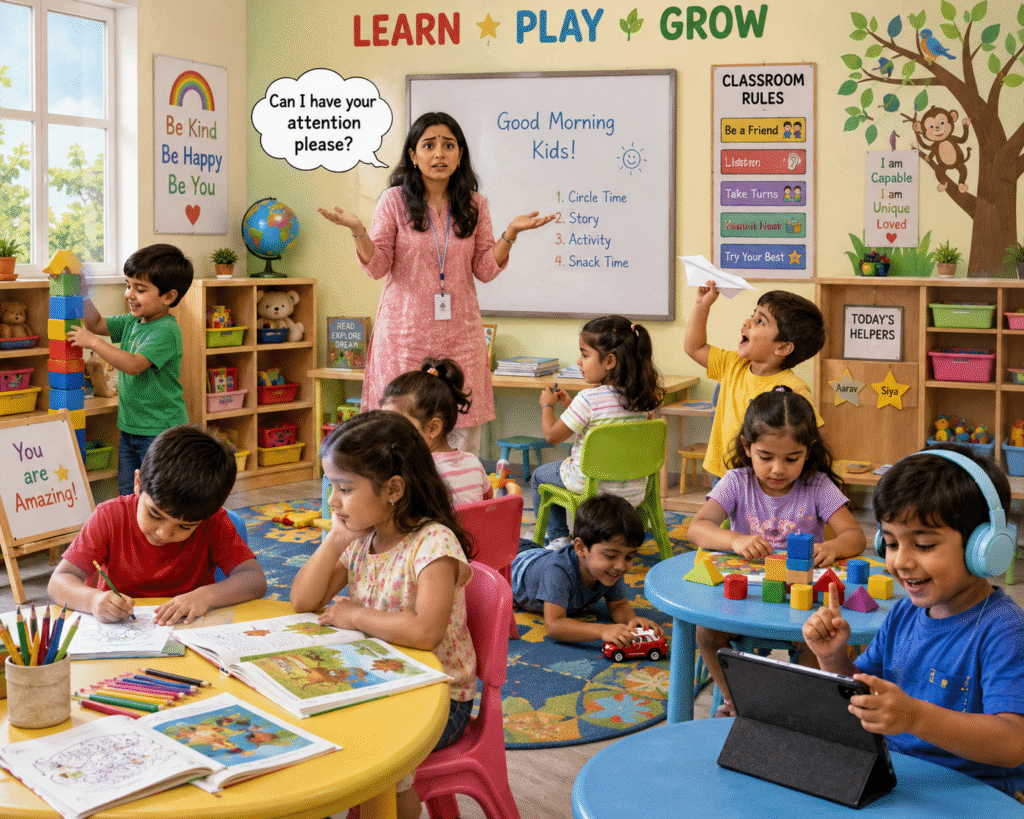
Walk into any preschool classroom today and you’ll notice something that many educators have been discussing with growing concern.
A child begins an activity enthusiastically, only to lose interest within minutes. Another child switches from one toy to another without fully engaging with either. During story time, some children struggle to sit and listen through a short story that would have held the attention of previous generations.
Is this simply a phase of childhood?
Or are we witnessing a larger shift in how young children focus, learn, and interact with the world around them?
Across preschools and early learning centres, educators are observing what many are calling an “attention span crisis.” While every child develops differently, there is a noticeable increase in difficulties related to concentration, sustained focus, listening skills, and patience among young learners.
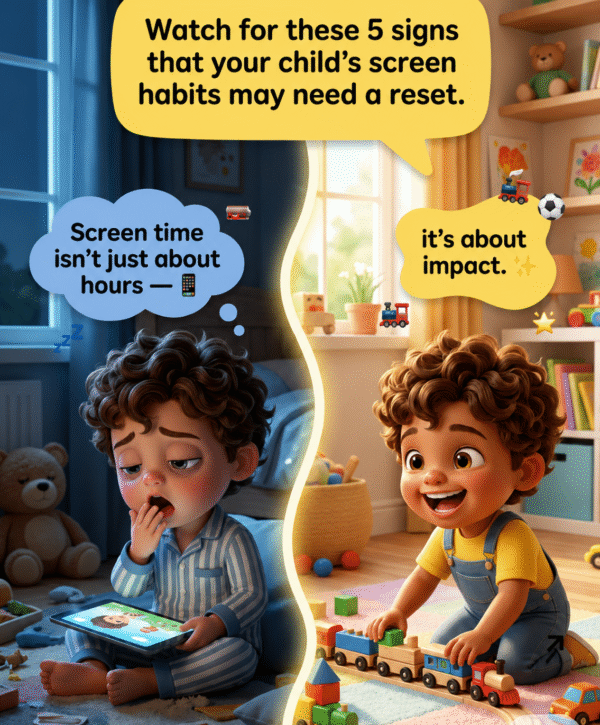
One factor that frequently enters the conversation is the growing exposure to screens, especially fast-paced cartoons, short-form videos, and digital entertainment.
Understanding what is happening and how we can respond is essential for parents, teachers, and schools committed to supporting healthy child development.
What Is Attention Span?
Attention span refers to the amount of time a child can focus on a task, activity, or piece of information without becoming distracted.
For preschool children, attention spans are naturally short. A three-year-old is not expected to sit quietly for an hour. Movement, exploration, and curiosity are all normal parts of early childhood.
However, educators are noticing something different today.
Children who once spent fifteen to twenty minutes building with blocks, drawing pictures, or listening to stories may now move rapidly from one activity to another. Many require constant stimulation to stay engaged.
The challenge is not that children are energetic. The concern is that some children are finding it increasingly difficult to sustain attention even during activities designed specifically for their age group.
What Educators Are Seeing in Preschool Classrooms
Many preschool teachers report similar observations.
Children often:
- Lose interest in activities very quickly
- Seek constant entertainment
- Interrupt frequently during group discussions
- Struggle to listen to instructions
- Find waiting difficult
- Become frustrated when immediate rewards are unavailable
- Need frequent reminders to stay engaged
These behaviours are not signs of laziness or poor parenting. They are often connected to the environments children are growing up in and the experiences shaping their brains during crucial developmental years.
The Cartoon Effect: Why Fast-Paced Entertainment Matters
Cartoons have always been a part of childhood.
Many adults fondly remember spending time watching animated shows after school. The difference today lies in the speed, intensity, and availability of digital content.
Modern cartoons often feature:
- Rapid scene changes
- Bright visual effects
- Continuous sound stimulation
- Instant action sequences
- Constant novelty
Some scenes may change every few seconds, creating a highly stimulating viewing experience.
When children spend significant time consuming fast-paced content, their brains become accustomed to receiving information quickly and continuously.
Real-life learning does not work that way.
Listening to a teacher, building a puzzle, painting a picture, or waiting for a turn in a game requires patience and sustained attention.
Compared to the excitement of a fast-moving cartoon, these activities can feel slow.
As a result, some children may struggle to remain engaged in classroom experiences that are essential for cognitive development.

How Excessive Screen Time Affects Child Development
Research in early childhood education continues to explore the relationship between screen time and attention.
While screens themselves are not inherently harmful, excessive or unmanaged screen exposure can influence several developmental areas.
Reduced Concentration
Children who frequently switch between videos, games, and digital content may find it harder to focus on a single task for extended periods.
Lower Frustration Tolerance
Many digital platforms provide instant rewards.
Real-world activities involve trial and error, waiting, and persistence. Children accustomed to immediate feedback may become frustrated more easily when challenges arise.
Limited Imaginative Play
Open-ended play encourages creativity and problem-solving.
When screen-based entertainment replaces imaginative play, children may have fewer opportunities to develop these important skills.
Reduced Social Interaction
Young children learn through conversation, observation, and interaction with others.
Excessive screen time can reduce opportunities for meaningful social engagement.
Why Attention Matters in Early Childhood Education
Attention is not just about sitting still.
It is closely connected to learning, memory, language development, and problem-solving.
When children can focus effectively, they are better able to:
- Follow instructions
- Understand stories
- Develop language skills
- Build relationships
- Complete tasks
- Learn new concepts
- Participate confidently in classroom activities
Strong attention skills form the foundation for future academic success.
This is why early childhood educators place significant emphasis on activities that encourage concentration and engagement.
The Role of Play in Building Attention Span
The good news is that attention skills can be developed.
One of the most effective ways to strengthen focus in preschool children is through purposeful play.
Children naturally learn through hands-on experiences.
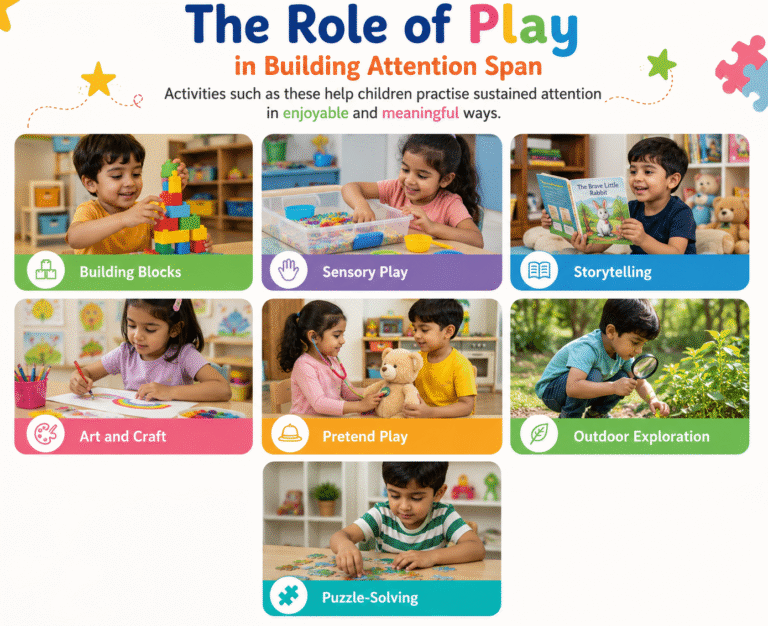
Activities such as:
- Building blocks
- Sensory play
- Storytelling
- Art and craft
- Pretend play
- Outdoor exploration
- Puzzle-solving
help children practise sustained attention in enjoyable and meaningful ways.
Unlike passive screen consumption, these activities require active participation, decision-making, and concentration.
Storytelling: A Powerful Tool for Focus
At Caprics Learning Lab, storytelling is viewed as much more than entertainment.
A well-told story captures children’s imagination, encourages listening, and strengthens attention.
When children follow characters, predict outcomes, and engage in discussions, they practise maintaining focus over extended periods.
Storytelling also supports:
- Vocabulary development
- Listening skills
- Emotional understanding
- Memory retention
- Creative thinking
This is one reason why storytelling continues to be a vital component of quality preschool education.
Practical Strategies for Parents
Parents play a crucial role in helping children develop healthy attention habits.
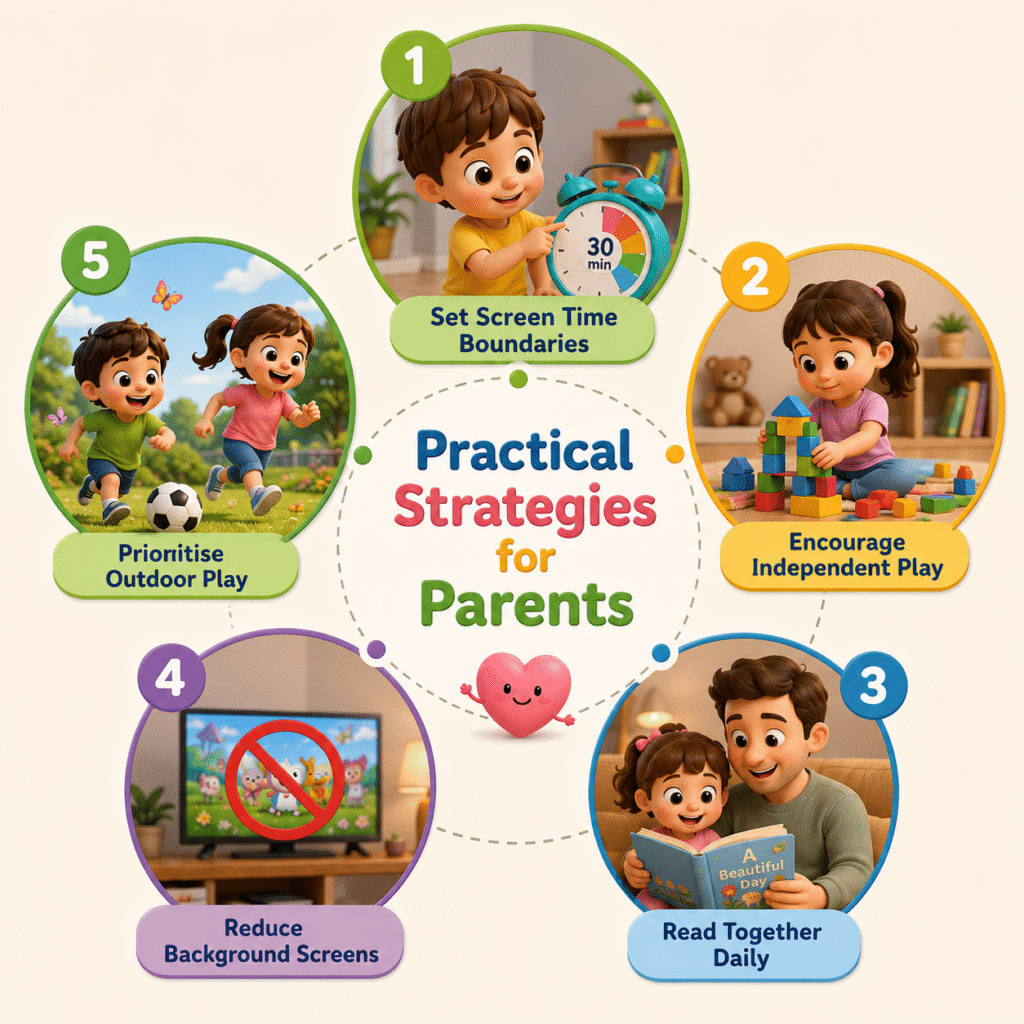
Here are some simple strategies that can make a significant difference.
Set Screen Time Boundaries
Create clear and consistent limits around screen usage.
Focus on quality content rather than unlimited access.
Encourage Independent Play
Allow children time to play without constant entertainment or direction.
Independent play helps build concentration and creativity.
Read Together Daily
Reading stories encourages listening, imagination, and sustained attention.
Even ten to fifteen minutes a day can have a positive impact.
Reduce Background Screens
Televisions and devices running in the background can create unnecessary distractions.
Creating calmer environments supports better focus.
Prioritise Outdoor Play
Nature offers rich sensory experiences that help children slow down, observe, and engage deeply with their surroundings.
What Schools Can Do
Preschools and early learning centres can also play an important role in addressing attention challenges.
Effective classrooms often include:
Activity-Based Learning
Hands-on learning experiences keep children actively engaged.
Structured Routines
Predictable schedules help children feel secure and focused.
Limited Passive Screen Exposure
Young learners benefit most from active participation rather than passive viewing.
Rich Language Environments
Songs, conversations, storytelling, and group discussions support attention and communication skills.
Purposeful Movement
Movement breaks help children regulate energy levels and return to learning with improved focus.
Building Attention in a Digital World
Technology is not going away.
The goal is not to eliminate screens entirely but to create balance.
Children need opportunities to experience:
- Conversations
- Storytelling
- Creative play
- Outdoor exploration
- Problem-solving activities
- Social interactions
These experiences help develop the attention skills that support lifelong learning.
When children spend more time creating than consuming, exploring than scrolling, and imagining than watching, they develop stronger foundations for future success.
Looking Ahead
The attention span challenges educators are observing today are real, but they are not permanent.
Children are remarkably adaptable.
With thoughtful guidance from parents, teachers, and schools, young learners can develop the focus, patience, and engagement skills they need to thrive.
The solution is not found in stricter rules or more academic pressure.
Instead, it lies in creating environments rich in play, storytelling, movement, conversation, and meaningful learning experiences.
At Caprics Learning Lab, we believe that childhood should be filled with curiosity, creativity, exploration, and joyful learning.
By understanding the factors affecting attention span in children and responding with developmentally appropriate practices, we can help every child build the focus and confidence needed for a bright future.
After all, attention is not just about paying attention in class.
It is about learning to engage deeply with the world around us, one meaningful moment at a time.