Choosing a preschool curriculum is not just another decision. It shapes your school’s identity, classroom culture, teacher confidence, and parent trust.
Many preschool owners think curriculum is only about books, worksheets, or activities. But in reality, it decides how children learn, how teachers teach, and how parents feel about your school.
Still, many schools make simple mistakes while selecting a preschool curriculum. These mistakes may not show immediately, but over time they lead to poor learning outcomes, confused teachers, and unhappy parents.
If you are a preschool owner, school leader, or planning to start a preschool, this guide will help you avoid those mistakes and choose the right path.
Why Choosing the Right Preschool Curriculum Matters
A good preschool curriculum creates:
- Happy and confident children
- Clear and structured teaching for educators
- Strong trust with parents
- Better school reputation and admissions
A poor curriculum creates:
- Confusion in classrooms
- Stressed teachers
- Low engagement from children
- Doubt in parents’ minds
That is why curriculum selection is one of the most important decisions for any preschool.
Mistake 1: Ignoring NEP 2020 and Foundational Learning Approach
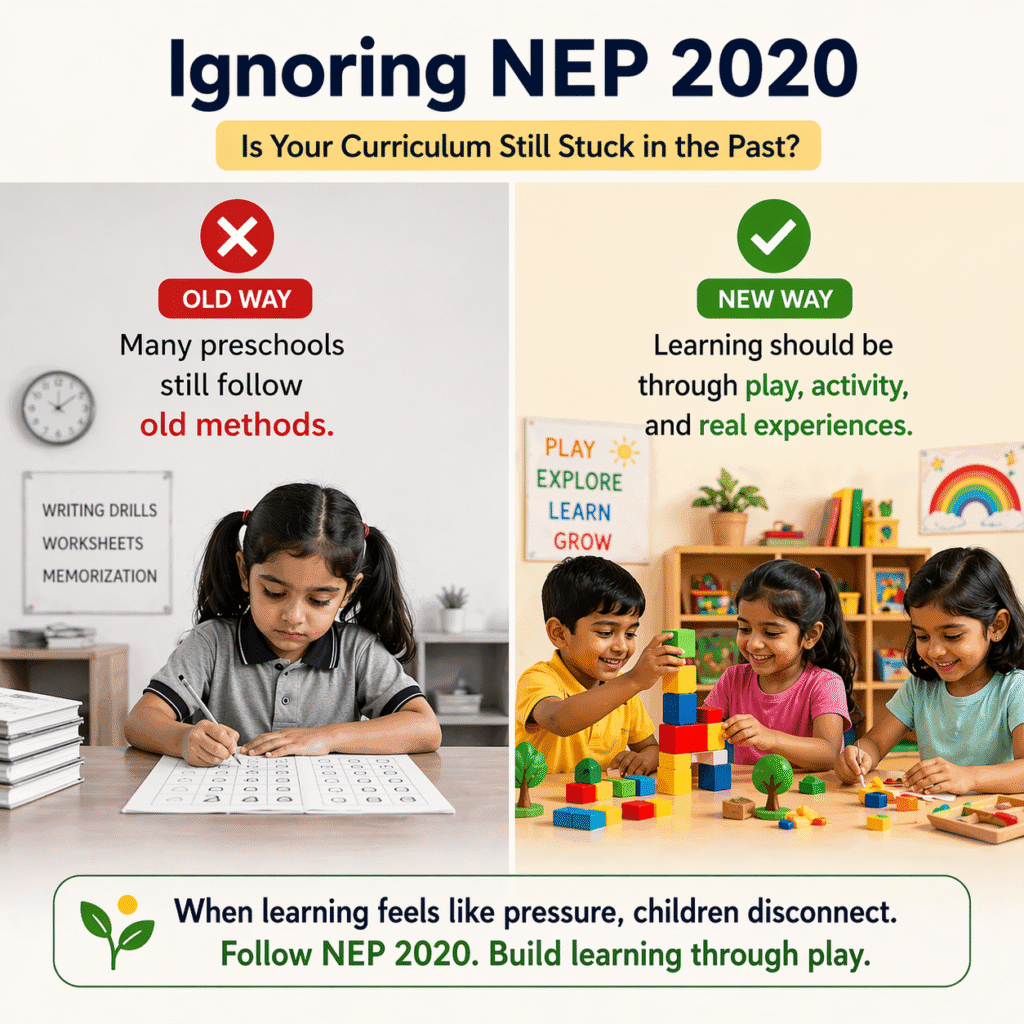
In India, preschool education has changed a lot after the National Education Policy 2020.
This policy clearly says that early learning should be:
- Play-based
- Activity-based
- Experiential (learning by doing)
- Focused on overall development, not just academics
Still, many preschools continue to use old methods like:
- Early writing drills
- Heavy worksheets
- Memorization-based learning
This creates a gap between what children need and what they receive.
Why This Is a Problem
Young children do not learn best through pressure or repetition. They learn through play, stories, movement, and exploration.
If your curriculum does not follow modern early childhood education methods, children may:
- Lose interest in learning
- Feel stressed
- Miss important developmental skills
How to Avoid This
Choose a preschool curriculum that:
- Follows NEP 2020 guidelines
- Focuses on play-based learning
- Builds language and math through real-life activities
- Encourages curiosity and creativity
- Uses observation instead of formal tests
When your curriculum aligns with national education standards, your school automatically gains credibility.
Mistake 2: Choosing Content Without Teacher Training
Many curriculum providers give only materials like:
- Books
- Worksheets
- Flashcards
But they do not train teachers on how to use them.
This is one of the biggest mistakes preschool owners make.
Why This Is a Problem
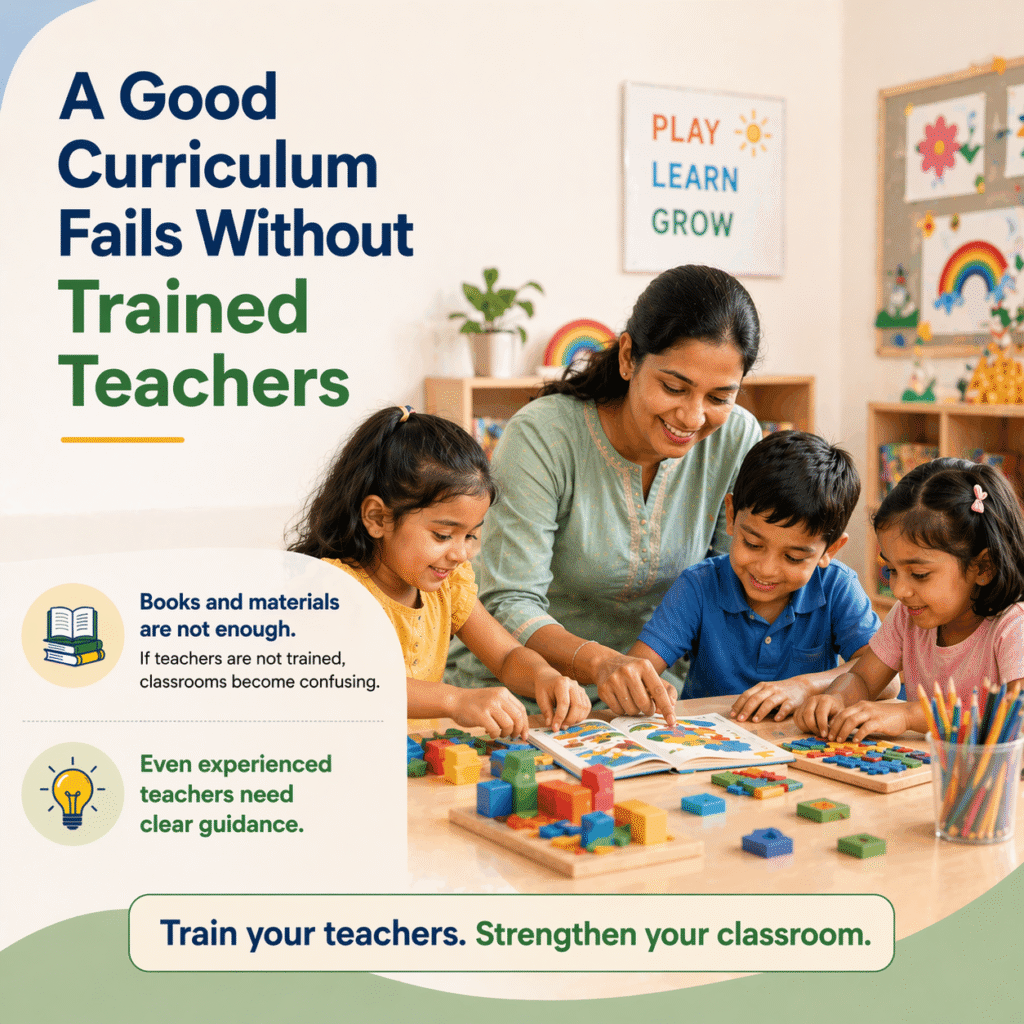
Even a great curriculum will fail if teachers are not trained properly.
Without training, teachers may:
- Feel confused about lesson delivery
- Go back to old teaching methods
- Miss the purpose of activities
- Struggle with classroom management
This leads to inconsistent learning across classrooms.
How to Avoid This
Always choose a curriculum that includes:
- Teacher training sessions
- Simple and clear teacher manuals
- Step-by-step lesson guidance
- Ongoing support and check-ins
When teachers feel confident, classrooms become smooth, engaging, and effective.
At Caprics Learning Lab, teacher empowerment is a core focus. Because a strong teacher creates a strong classroom.
Mistake 3: Using One Curriculum for All Age Groups
Children between ages 2 to 6 grow very fast. Each year brings major changes in:
- Thinking ability
- Language skills
- Social behavior
- Physical development
Still, some schools use the same or slightly modified content for all age groups.
Why This Is a Problem
If the content is too difficult:
- Children feel frustrated
- They lose confidence
If the content is too easy:
- Children get bored
- They stop engaging
Both situations affect learning quality.
How to Avoid This
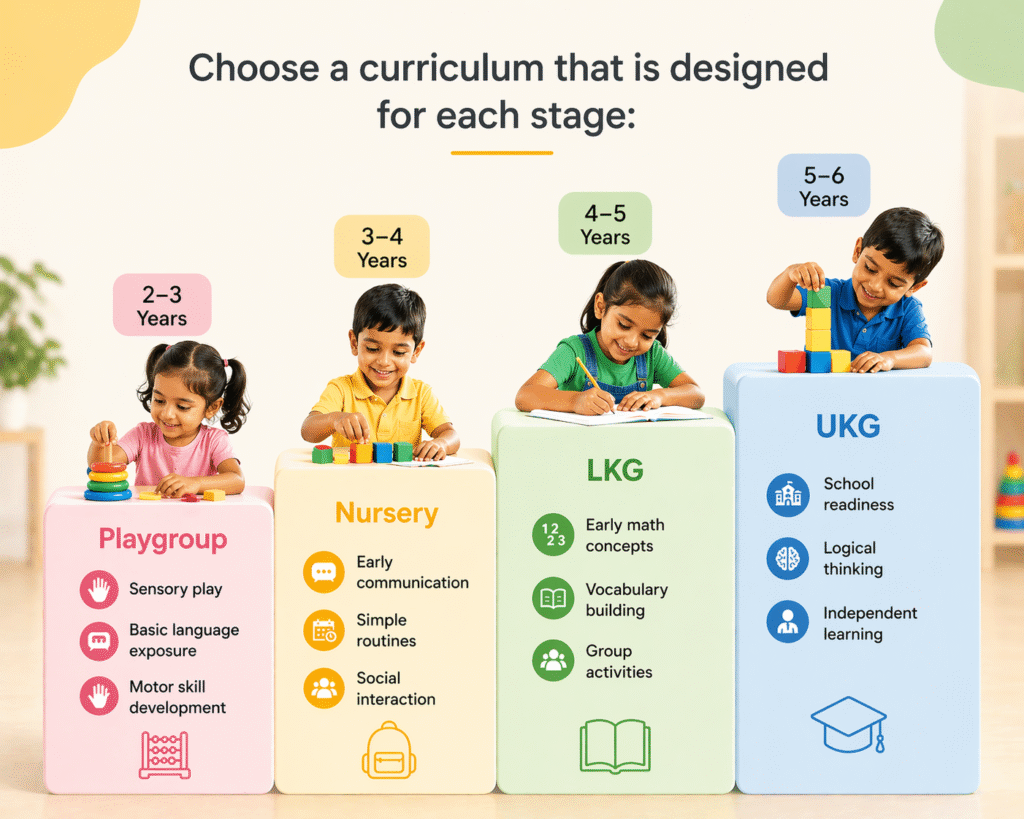
Choose a curriculum that is designed for each stage:
Playgroup (2–3 years):
- Sensory play
- Basic language exposure
- Motor skill development
Nursery (3–4 years):
- Early communication
- Simple routines
- Social interaction
LKG (4–5 years):
- Early math concepts
- Vocabulary building
- Group activities
UKG (5–6 years):
- School readiness
- Logical thinking
- Independent learning
A good preschool curriculum respects how children grow. It does not rush them or hold them back.
Mistake 4: Ignoring Parent Engagement
Parents are not just fee payers. They are partners in a child’s learning journey.
Many preschools forget this.
They focus only on classroom teaching and ignore communication with parents

Why This Is a Problem
When parents do not understand what their child is learning:
- They feel disconnected
- They start questioning the school
- They compare with other schools
- They may even leave
Parent trust is directly linked to school growth.
How to Avoid This
Choose a curriculum that supports parent communication through:
- Regular updates
- Activity sharing
- Simple home-based tasks
- Progress insights
Also, schools should:
- Conduct small events or showcases
- Share child portfolios
- Encourage parent participation
When parents feel involved, they become your biggest supporters.
Mistake 5: Focusing Too Much on Academics
Many preschool owners believe that more academics means better learning.
So they push:
- Early reading
- Writing practice
- Math worksheets
But this approach does not match how young children learn.
Why This Is a Problem
Early childhood is not meant for heavy academics.
If children are pushed too early:
- They lose interest in learning
- Creativity reduces
- Stress increases
- Curiosity disappears
Learning should feel natural and enjoyable.
How to Avoid This
Choose a balanced preschool curriculum that includes:
- Language and math through play
- Art, music, and storytelling
- Physical movement and outdoor play
- Social and emotional development
- Life skills and independence
A strong foundation is not built by pressure. It is built through joyful learning experiences.
How Caprics Learning Lab Helps Schools Get It Right
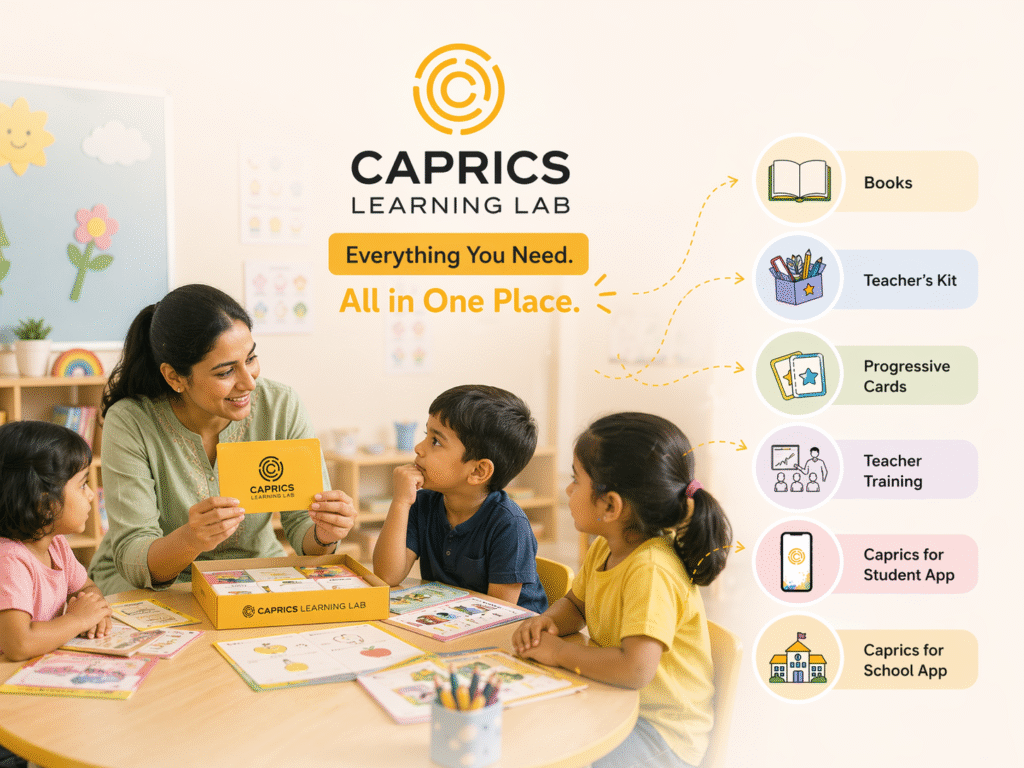
At Caprics Learning Lab, the focus is simple.
Make learning meaningful for children and manageable for schools.
The curriculum and support systems are designed to solve real problems faced by preschool owners.
What Makes Caprics Different
1. NEP-Aligned Learning Approach
The curriculum follows modern early childhood education practices with play-based and activity-driven learning.
2. Strong Teacher Support
Teachers receive clear guidance, training, and continuous support. This helps them feel confident and prepared.
3. Age-Appropriate Structure
Each stage is carefully designed based on how children grow and learn.
4. Parent Engagement Tools
Schools get simple ways to keep parents informed and involved.
5. Holistic Development Focus
The curriculum covers all areas:
- Language
- Math
- Creativity
- Physical development
- Social skills
This ensures children grow in a balanced way.
Real Impact on Schools
Schools that follow a structured and supported curriculum often see:
- Better classroom management
- More confident teachers
- Happier children
- Stronger parent trust
- Increased admissions
When systems are clear, everything becomes easier.
Final Thoughts
Choosing a preschool curriculum is not about selecting materials. It is about building a strong learning environment.
When you avoid these common mistakes:
- Ignoring NEP guidelines
- Skipping teacher training
- Using the same content for all ages
- Neglecting parent communication
- Overloading academics
You create a preschool that truly supports children.
A good curriculum brings clarity, confidence, and consistency.
And when that happens, your school does not just run. It grows.
A Simple Truth to Remember
Children do not need pressure to learn.
They need the right environment.
And the right curriculum creates that environment.
If you are planning to upgrade your preschool or start fresh, choosing the right curriculum today will shape your school’s future for years to come.