National Curriculum Framework for Foundation Stage and Its Role in Early Childhood Education
The early years of a child’s life quietly shape everything that follows. How children learn, express emotions, and understand their surroundings begins long before formal schooling. In India, the National Curriculum Framework for Foundation Stage offers a clear direction for educating children between three and eight years of age. It focuses on joyful learning, strong foundations, and development that feels natural to the child.
This blog explains the framework in a clear and simple way for teachers, school leaders, and parents.
Understanding the Foundation Stage
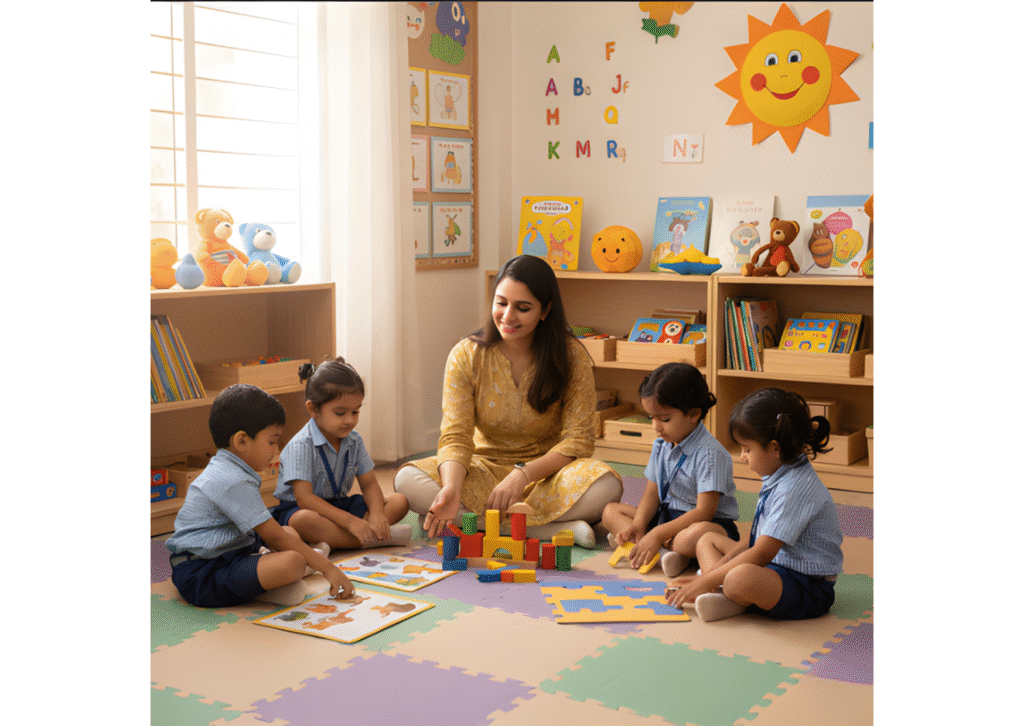
The Foundation Stage includes three years of early childhood education and the first two years of primary school. This stage covers children from pre-school to Class Two and treats these years as one connected learning journey.
Instead of pushing children quickly into formal academics, the framework supports a smooth transition. Children move from play-based learning to structured classroom experiences without fear or pressure.
What Is the National Curriculum Framework for Foundation Stage
The National Curriculum Framework for Foundation Stage is a guiding document developed by National Council of Educational Research and Training. It aligns with the goals of the National Education Policy 2020.
The framework does not prescribe textbooks or exams. Instead, it explains how young children learn and what kind of learning environments support healthy growth. Teachers are encouraged to design flexible and meaningful experiences based on children’s needs.
Why the Foundational Years Matter
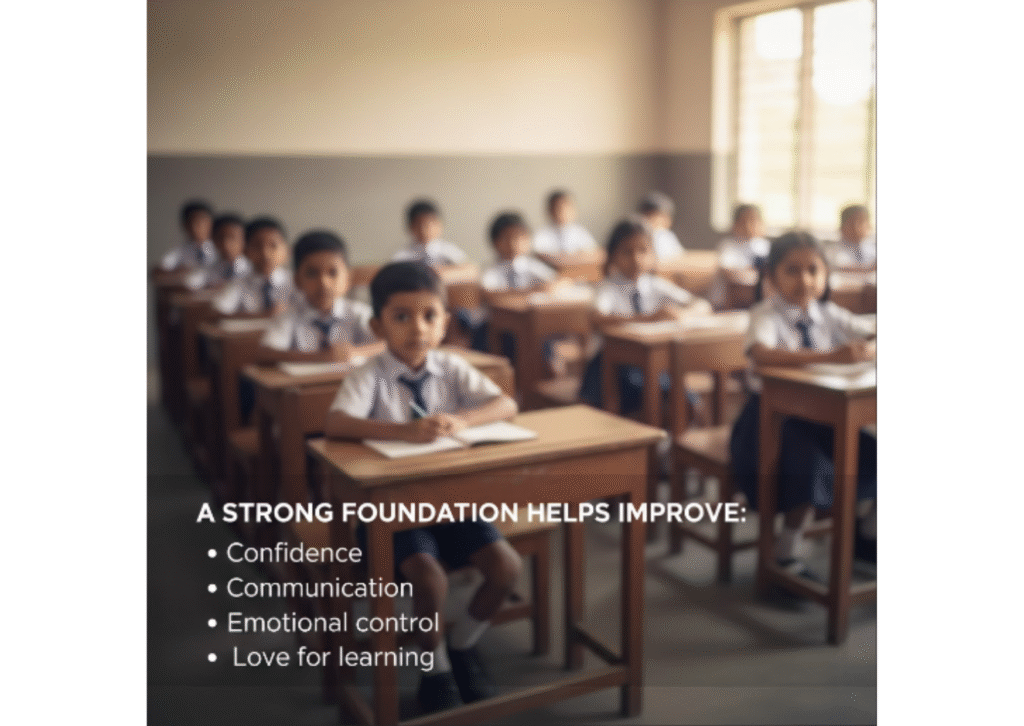
The early years are when children build the base for language, thinking, emotional control, and social behaviour. Learning during this stage happens through everyday interactions and exploration.
A strong Foundation Stage helps children:
- Develop confidence and curiosity.
- Build language and communication skills.
- Learn to manage emotions.
- Feel positive about school and learning.
These skills support long-term academic and personal growth.
Core Principles That Guide the Framework
The framework is based on a few clear principles that shape teaching practices.
- Learning is child-centred. This means lessons are planned around how children learn, not around rigid schedules.
- Play is treated as a serious form of learning. Through play, children experiment, imagine, and solve problems.
- Inclusion is central. Every child, regardless of background or ability, is supported.
- Development is holistic. Physical, emotional, social, and cognitive growth are all given equal importance.
How Teaching Looks in the Classroom
Teaching in the Foundation Stage focuses on experiences rather than instructions. Teachers guide learning instead of delivering long explanations.
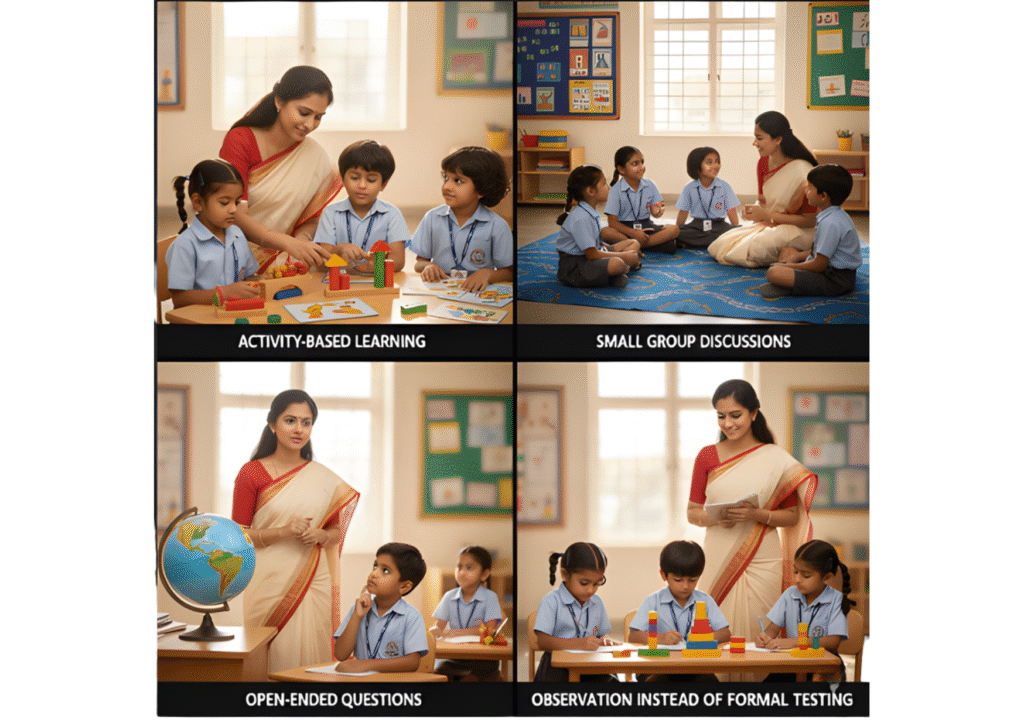
Classroom practices include:
- Activity-based learning.
- Small group discussions.
- Open-ended questions.
- Observation instead of formal testing.
Classrooms are designed to feel safe and welcoming. Materials are accessible, and children are encouraged to explore and make choices.
Assessment in the Foundation Stage
Assessment is gentle and supportive. There are no formal exams or marks during these years.
Teachers assess learning by watching how children participate in activities and how their skills develop over time. The goal is to understand each child better and support their growth.
Role of Teachers in Foundational Learning
Teachers play a central role in shaping early learning experiences. They observe children carefully and plan activities that match their interests and abilities.
Their role includes creating a caring environment, supporting social interactions, and maintaining regular communication with parents. Teachers also help children feel safe to make mistakes and learn from them.
How Parents Support Learning at Home
Parents are an important part of the Foundation Stage. Learning continues beyond the classroom through daily interactions at home.
Parents can support learning by:
- Talking and listening to their child regularly.
- Reading stories together.
- Allowing free and unstructured play.
- Encouraging curiosity and questions.
These simple actions strengthen the connection between home and school.
How This Framework Differs from Earlier Approaches
Earlier systems often focused on memorisation and early academic pressure. Children were expected to sit still, follow instructions, and complete worksheets.
The new framework focuses on understanding, experience, and emotional safety. Learning becomes enjoyable, meaningful, and suited to a child’s age and development.
Benefits of the National Curriculum Framework for Foundation Stage
The framework supports long-term success for children and schools.
Key benefits include:
- Confident and curious learners.
- Strong thinking and communication skills.
- Better emotional and social development.
- Positive attitudes towards school.
Schools also gain flexibility to design learning that suits their children and community.
Conclusion
The National Curriculum Framework for Foundation Stage marks an important shift in early education in India. It recognises that the years from three to eight are the true foundation of learning. By focusing on play, inclusion, and holistic development, the framework respects how children naturally grow and learn.
When teachers, parents, and schools work together to follow these principles, children gain strong foundations that support learning, confidence, and well-being throughout life.