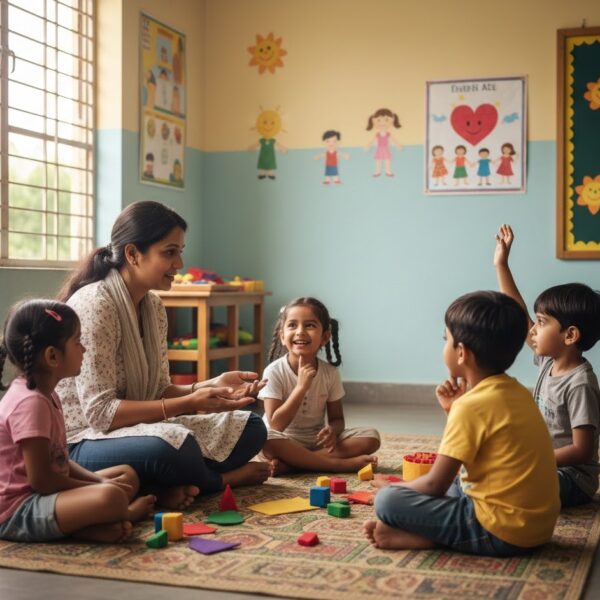
Education today goes beyond textbooks and exams. Children need skills that help them understand themselves, manage emotions, build relationships, and make responsible choices. This is where Social-Emotional Learning (SEL) becomes important.
Across schools in India and around the world, educators and parents are realising that academic success alone is not enough. Children must also learn how to handle feelings, work with others, and respond to challenges in a healthy way. Social-Emotional Learning supports this balanced growth.
This blog explains what Social-Emotional Learning is, why it matters, how it helps children, and how schools and parents can support it effectively.
What Is Social-Emotional Learning (SEL)?
Social-Emotional Learning, commonly known as SEL, is the process through which children develop the ability to understand and manage emotions, set positive goals, show empathy, build healthy relationships, and make responsible decisions.
SEL focuses on five core areas:
- Self awareness
- Self management
- Social awareness
- Relationship skills
- Responsible decision making
These skills help children grow into confident, emotionally balanced individuals who can handle both academic and life challenges.
Key Benefits of Social-Emotional Learning for Children
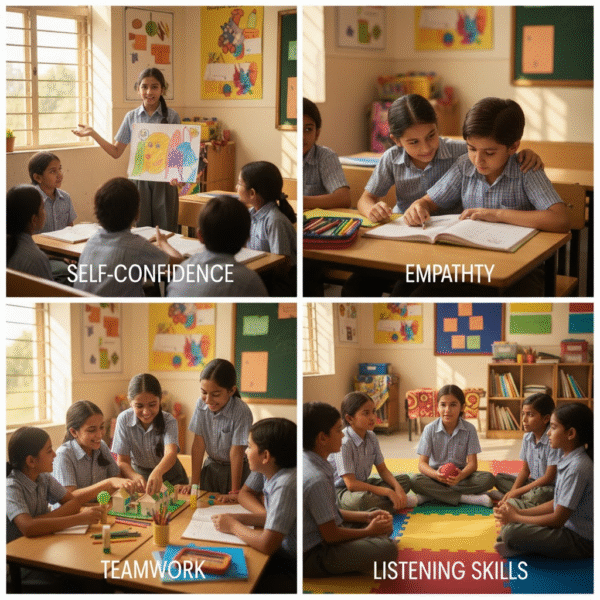
1. Better Emotional Awareness
Children learn to identify emotions like happiness, anger, fear, and sadness. This awareness helps them express feelings instead of suppressing them.
2. Improved Behaviour and Self Control
SEL teaches children how to pause, think, and respond calmly. This reduces classroom conflicts and impulsive behaviour.
3. Stronger Relationships
Children learn listening skills, empathy, cooperation, and respect. These skills support friendships and healthy peer interactions.
4. Increased Confidence and Self Esteem
When children understand their strengths and emotions, they feel more confident and secure in their abilities.
5. Academic Improvement
Emotionally balanced children can focus better, follow instructions, and engage actively in learning.
The Role of SEL in Early Childhood Education
Early childhood is the foundation stage for emotional development. During these years, children learn how to interact with the world around them.
Introducing Social-Emotional Learning in early education helps children:
- Recognise emotions through play and stories
- Learn sharing, turn taking, and cooperation
- Develop language to express feelings
- Build trust with teachers and peers
Simple activities like storytelling, role play, group games, and emotion cards can make SEL learning natural and engaging for young children.
How Schools Can Implement Social-Emotional Learning
Schools play a major role in nurturing emotional skills. SEL should not be treated as a separate subject. It works best when integrated into daily classroom routines.
Practical Ways Schools Can Support SEL
- Morning circle time for emotional check-ins
- Story based discussions about feelings and choices
- Group activities that encourage teamwork
- Teacher modelling of calm and respectful behaviour
- Visual tools like emotion charts and scenario cards
When teachers receive proper training, SEL becomes part of everyday teaching rather than an additional task.
The Role of Teachers in Social-Emotional Learning

Teachers are emotional role models for children. Their responses, tone, and behaviour influence how children handle emotions.
Teachers can support SEL by:
- Listening patiently to children
- Acknowledging emotions without judgement
- Encouraging problem solving instead of punishment
- Creating a safe and inclusive classroom environment
When children feel emotionally safe, learning becomes more effective and joyful.
How Parents Can Support SEL at Home
Social-Emotional Learning does not stop at school. Parents play an equally important role.
Simple ways parents can support SEL include:
- Talking openly about emotions at home
- Encouraging children to name their feelings
- Modelling calm behaviour during conflicts
- Reading stories that highlight emotions and values
- Praising effort instead of only results
Consistent support at home strengthens what children learn in school.
Conclusion
Social-Emotional Learning is no longer optional. It is a vital part of meaningful education. When children learn to understand emotions, respect others, and manage challenges, they grow into confident and compassionate individuals.
By integrating SEL in schools and supporting it at home, we can create learning environments that nurture both the mind and the heart. This balanced approach is key to raising emotionally strong and capable children in today’s world.